Thyroid Support Supplements: What's Inside
A calm look at thyroid supplement ingredients like iodine, selenium, zinc, tyrosine and ashwagandha, what the research suggests, and why blood tests come first.
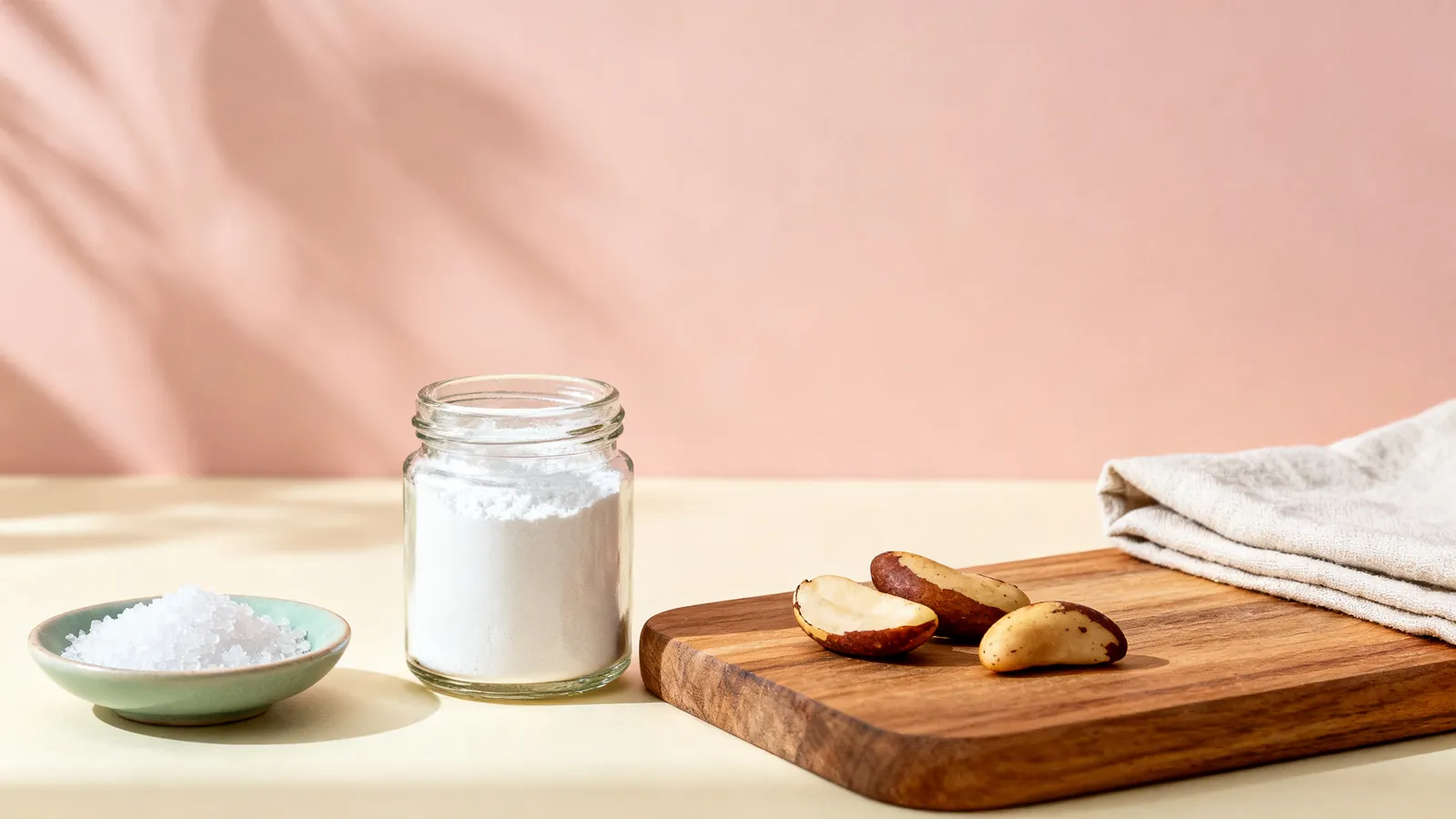
Tiredness, weight gain, feeling cold, dry skin, constipation, low mood. These are the symptoms that send many women over 40 down the pharmacy aisle looking for a thyroid supplement. They are also the symptoms that overlap with low iron, low vitamin D, poor sleep, perimenopause and an underactive thyroid. A supplement cannot tell the difference. A blood test can.
What the thyroid does and why symptoms alone are not a diagnosis
The thyroid is a small butterfly-shaped gland in the front of the neck. It takes iodine from the diet and uses it to make two hormones, thyroxine (T4) and triiodothyronine (T3). T4 is mostly a storage form; the body converts it to T3, the active form that sets the pace of metabolism in nearly every cell. The pituitary gland in the brain monitors how much thyroid hormone is circulating and adjusts its own signal, thyroid-stimulating hormone (TSH), to keep levels steady.
When the thyroid is underactive, everything slows. When it is overactive, everything speeds up. But the symptoms of an underactive thyroid are not specific. They look like perimenopause, like anaemia, like depression, like simply being exhausted. That is why the standard approach is a blood test measuring TSH, and often free T4, before anything is taken. If TSH is high, the pituitary is pushing hard, which usually points to an underactive thyroid. If TSH is low, the thyroid may be overactive. Either way, the result changes what is safe to take.
A thyroid supplement bought without a test is a guess. Worse, some ingredients can distort the very tests used to diagnose the problem.
What is actually in thyroid support products
Walk down the supplement aisle and the words on the front are usually “thyroid support” or “metabolism”. The back of the label is more informative. Common ingredients include:
- Iodine, often as potassium iodide or kelp. Iodine is the raw material for thyroid hormone, so it is essential. But most women in countries with iodised salt get enough, and too much can be harmful.
- Selenium, often as selenomethionine or sodium selenite. Selenium is needed for the enzymes that convert T4 to T3 and that protect the thyroid from oxidative stress.
- Zinc, often as zinc picolinate or citrate. Zinc is involved in thyroid hormone production and in the conversion of T4 to T3.
- Tyrosine, an amino acid. Thyroid hormone is made from tyrosine plus iodine, which is why it appears in these formulas.
- Ashwagandha (Withania somnifera), an adaptogenic herb. It has been studied for stress and sleep, and some small trials have looked at thyroid hormone levels.
- Glandular extracts, usually dried bovine or porcine thyroid tissue. These are the most problematic ingredient in the category.
- Blends that list “thyroid support complex” without amounts. Without amounts, there is no way to know what is being taken.
Some products also contain vitamin D, B vitamins, magnesium or iron, which are not thyroid-specific but are common deficiencies that mimic thyroid symptoms.
What the research suggests, and how strong it is
The evidence for individual nutrients is uneven. It is strongest where there is a known deficiency, and weakest where a nutrient is added to a normal diet.
Iodine. The link between severe iodine deficiency and thyroid problems is well established, and iodised salt programmes have reduced that burden in many countries. What is not established is a benefit from extra iodine in women who are already sufficient. Reviews of the research suggest that both too little and too much iodine can disturb thyroid function, and in some people with autoimmune thyroid conditions, a sudden iodine load can make things worse. Iodine is not a nutrient where more is better.
Selenium. Small trials and reviews have looked at selenium in people with autoimmune thyroid conditions, particularly Hashimoto’s thyroiditis and Graves’ disease. Some suggest modest changes in thyroid antibody levels; others find little difference. The evidence is mixed and the trials are small. Selenium is also genuinely toxic in excess, with a narrow margin between enough and too much.
Zinc. Zinc deficiency is associated with thyroid changes, and correcting a deficiency is reasonable. Trials of zinc supplementation in people who are not deficient are limited and do not show a consistent benefit for thyroid function.
Tyrosine. Tyrosine is present in protein-rich foods and the body makes it. There is very little research on tyrosine supplements for thyroid function in people who eat normally. It is included in formulas largely on the logic that it is a precursor, not because trials show it helps.
Ashwagandha. A few small studies have reported changes in thyroid hormone levels in people taking ashwagandha, but the studies are short, small and not designed to answer whether it helps thyroid disease. Reviews describe the evidence as preliminary. Ashwagandha is not a substitute for thyroid hormone replacement.
Glandular extracts. These contain dried animal thyroid tissue. The amount of actual thyroid hormone in them is not standardised and can vary between batches. In some cases they contain enough hormone to affect the body and to interfere with blood tests. They are not a reliable or safe way to manage thyroid function.
How to use thyroid supplements: forms, amounts and timing
If a blood test shows a deficiency in a specific nutrient, correcting that deficiency is a medical decision, not a supplement-aisle decision. Where supplements are used, the amounts commonly studied or listed on standard labels are modest.
- Iodine. The recommended daily intake for adults is around 150 micrograms, and many labels provide that amount or less. Doses above the upper limit, which is well below the milligram range, are not appropriate without medical supervision. Kelp varies widely in iodine content and is a poor way to control the dose.
- Selenium. Studies have commonly used 100 to 200 micrograms a day, often as selenomethionine. The upper limit for adults is around 400 micrograms a day from all sources. Do not stack multiple selenium-containing products.
- Zinc. Studies and labels commonly use 10 to 30 milligrams a day. Long-term high-dose zinc can interfere with copper absorption.
- Tyrosine. Labels commonly list 500 to 1000 milligrams. Evidence for benefit is weak.
- Ashwagandha. Trials have commonly used root extracts in the range of 300 to 600 milligrams a day. Evidence for thyroid outcomes is preliminary.
Timing matters most for one thing: levothyroxine. Thyroid hormone replacement is usually taken on an empty stomach, 30 to 60 minutes before food, and separated from supplements. Calcium, iron, magnesium, zinc and selenium can all reduce levothyroxine absorption if taken at the same time. A common approach is to take levothyroxine in the morning and any mineral supplements at least four hours later, or in the evening. Ask a pharmacist to check the timing against the full list of what is being taken.
Side effects, interactions and who should avoid these products
Iodine excess can cause thyroid dysfunction in susceptible people, including those with autoimmune thyroid disease. Selenium excess causes hair loss, brittle nails, garlic-like breath and, in serious cases, nerve damage. Zinc excess interferes with copper and can cause nausea and immune changes. Ashwagandha has been associated with liver injury in rare case reports and can cause drowsiness; it may interact with sedatives, thyroid medication and immunosuppressants. Tyrosine may interact with thyroid hormone and with monoamine oxidase inhibitors.
Glandular thyroid extracts are the clearest avoid. They contain unstandardised thyroid hormone, can cause symptoms of over-replacement such as palpitations, anxiety, sweating and weight loss, and can suppress the body’s own thyroid production. They should not be taken alongside prescribed thyroid medication.
Groups who should not take thyroid support supplements without medical advice include: anyone taking levothyroxine or antithyroid medication; anyone with known Hashimoto’s thyroiditis, Graves’ disease, thyroid nodules or thyroid cancer; anyone who is pregnant or breastfeeding; anyone with kidney or liver disease; and anyone taking anticoagulants, sedatives or immunosuppressants. Anyone with heart symptoms such as palpitations, chest pain or unexplained weight loss should seek medical assessment rather than a supplement.
What a thyroid supplement cannot do
A thyroid supplement does not replace thyroid hormone replacement. If the thyroid gland cannot make enough hormone, no combination of iodine, selenium, zinc, tyrosine or ashwagandha will restore normal levels. The treatment for an underactive thyroid is prescribed levothyroxine, adjusted by blood tests, and it is not something to stop or change without the prescriber.
A thyroid supplement also does not diagnose anything. Taking one before a blood test can mask or distort results, particularly iodine and glandular extracts. If tiredness and weight gain are the concern, the useful first step is a blood test, not a bottle.
Finally, a thyroid supplement does not address the most common causes of fatigue in women over 40. Iron deficiency, vitamin B12 deficiency, vitamin D deficiency, poor sleep, perimenopause and low protein intake are all more common than thyroid disease and all produce overlapping symptoms. A supplement aimed at the thyroid can delay finding the actual cause.
Comparing the common options
| Option | What it provides | Evidence strength | Who it does not suit |
|---|---|---|---|
| Iodine (potassium iodide, kelp) | Raw material for thyroid hormone | Strong for correcting deficiency; weak for extra in sufficient diets | Anyone with autoimmune thyroid disease, nodules, or already taking iodine; kelp is hard to dose |
| Selenium (selenomethionine) | Cofactor for T4-to-T3 conversion and antioxidant enzymes | Mixed; small trials in autoimmune thyroid conditions | Anyone already taking selenium or a multivitamin containing it; do not exceed the upper limit |
| Zinc (picolinate, citrate) | Involved in hormone production and conversion | Reasonable if deficient; limited otherwise | Long-term high doses; anyone on copper-lowering treatment |
| Tyrosine | Amino acid precursor | Weak; little research in people eating normally | Anyone taking MAOIs or thyroid hormone without advice |
| Ashwagandha | Adaptogenic root extract | Preliminary; small short studies | Pregnancy, breastfeeding, liver disease, sedatives, immunosuppressants, thyroid medication |
| Glandular thyroid extract | Dried animal thyroid tissue, unstandardised hormone | Not appropriate as a supplement | Everyone; especially anyone on levothyroxine or with heart symptoms |
Getting tested, and what to ask
The tests that matter are TSH, and usually free T4. In some cases a doctor will also check free T3, thyroid antibodies (thyroid peroxidase and thyroglobulin antibodies), and a thyroid ultrasound. Iron studies, vitamin B12, folate and vitamin D are worth checking because deficiencies in these mimic thyroid symptoms and are common in women over 40.
Before starting any thyroid support supplement, speak to a doctor or pharmacist, especially if medication is being taken, if pregnant or breastfeeding, or if there is a medical condition. Bring the actual bottle so the ingredients and amounts can be checked. Ask whether the product contains iodine or glandular extract, whether it interacts with levothyroxine timing, and whether a blood test is needed first. Do not stop or change prescribed thyroid medication without the prescriber.
Common questions
What is the best thyroid support supplement?
There is no single best product, because the right choice depends on what a blood test shows. If a specific nutrient is low, correcting that deficiency with medical advice is reasonable. If thyroid hormone is low, the treatment is prescribed levothyroxine, not a supplement. Products with glandular extracts are best avoided because the hormone content is not standardised.
Can thyroid supplements replace levothyroxine?
No. Levothyroxine replaces the hormone the thyroid cannot make, and the dose is adjusted by blood tests. No combination of iodine, selenium, zinc, tyrosine or ashwagandha does the same job. Do not stop or change prescribed thyroid medication without speaking to the prescriber.
Do thyroid vitamins help with weight loss?
If weight gain is caused by an underactive thyroid, treating that with prescribed medication may help weight return toward baseline, but it is not a weight-loss treatment. Thyroid supplements themselves have not been shown to cause weight loss in people whose thyroid function is normal. Unexplained weight change needs a medical assessment.
How much iodine is too much for the thyroid?
The recommended intake for adults is around 150 micrograms a day, and the tolerable upper limit is well below the milligram range. Regular intake above that, especially from kelp, can disturb thyroid function in some people, particularly those with autoimmune thyroid disease. Iodine is not a nutrient where more is better.
Can I take thyroid supplements with levothyroxine?
Some minerals, including calcium, iron, magnesium, zinc and selenium, reduce levothyroxine absorption if taken at the same time. A common approach is levothyroxine on an empty stomach in the morning and minerals at least four hours later. Ask a pharmacist to check the timing and ingredients against the full medication list.
Read next

GLP-1 Supplements: What They Are and Are Not
GLP-1 supplements are not the same as prescription GLP-1 medicines. Learn what is inside, what the research suggests, and who should avoid them.
Iodine for the Thyroid: What It Does and Safe Use
How iodine supports thyroid hormones, food sources, who may be low, safe upper limits, Hashimoto's caution, and what potassium iodide tablets are really for.

Menopause Weight Gain: What Supplements Can and Cannot Do
Weight gain after menopause is common. Learn what supplements are sold for it, what the research shows, and what actually helps shift weight to the middle.